

July 2026 | by Michael Turner
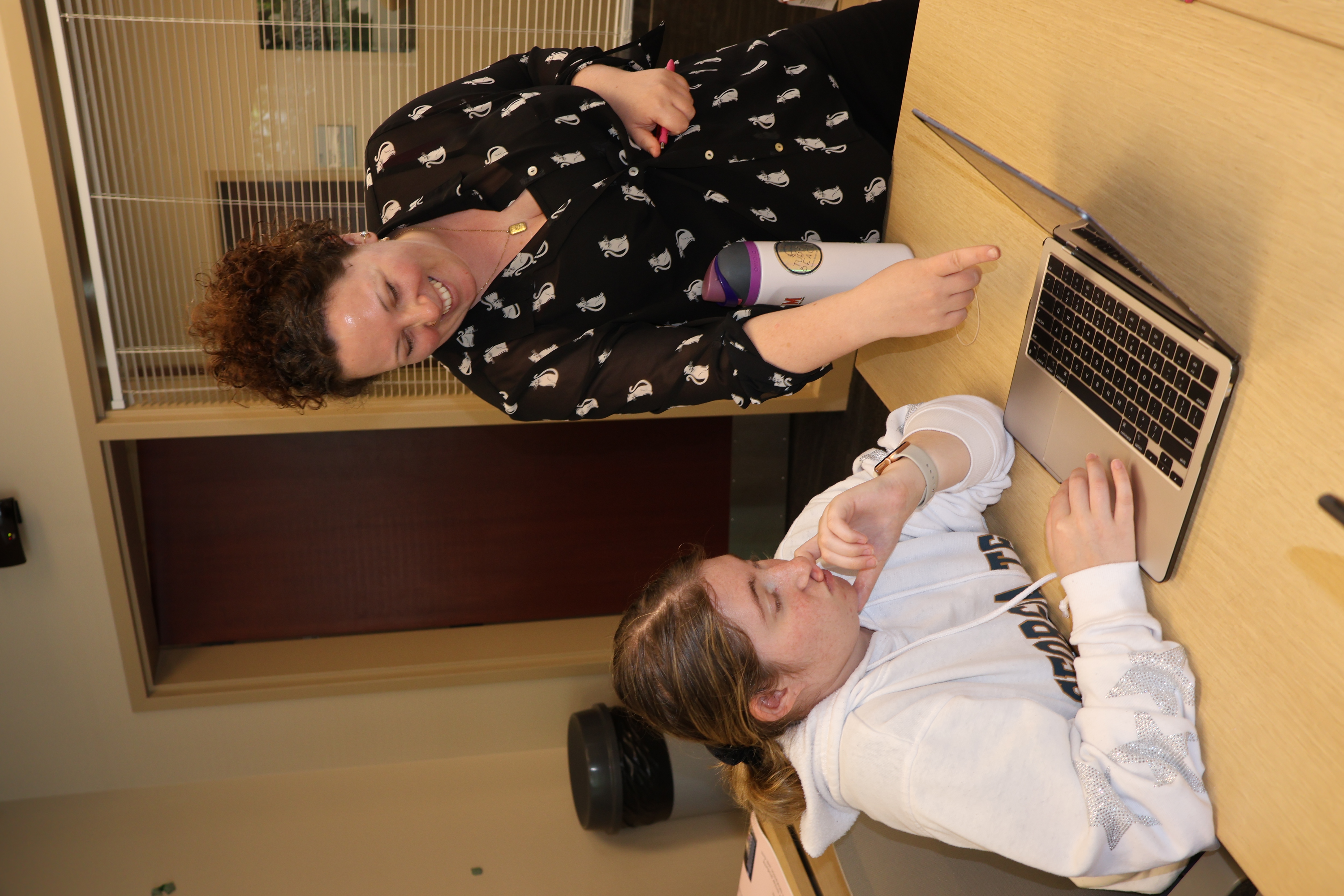 This spring, Georgia Tech's EXCEL program, a four-year college certificate program for students with intellectual and developmental disabilities, introduced a new course designed to help students thoughtfully engage with AI and its applications. The new class, officially listed as Technology II and titled AI Skills for Life, gives students hands-on opportunities to explore AI tools in practical ways while building the confidence to use them in their daily lives.
"We wanted students to not be behind the bell curve of adoption for Al but rather to learn and engage with this new technology," said Nathan Heald, assistant director of EXCEL and co-instructor. "It gives the opportunity to practice in a safe environment where students learn not just the buzzwords, but what it actually means to use these tools."
The course, co-taught by Heald and Rachel Lowy, a Ph.D. candidate in Tech's Human-Centered Computing program, brought together eleven EXCEL students from across multiple class years, along with peer mentors. Together, they explored how platforms like ChatGPT,
Gemini, NotebookLM, and Goblin Tools can support everyday tasks and promote independence.
The class combined guided instruction with hands-on experimentation, introducing new tools and concepts before applying them to real-world scenarios such as writing professional emails, and creating study guides and flash cards. Throughout the process, instructors encouraged students to evaluate the actual utility of AI and improve results through thoughtful prompting and revision.
Beyond technical skills, the course emphasized ethics and privacy. Students learned what information should not be shared, how data may be used, and how to make informed choices about their comfort levels with these technologies.
"Being considerate and thoughtful about how we engage is really important to reducing risk and promoting safety with these tools," Heald said. "Having the frameworks to understand how to engage appropriately is central so that they don't put themselves, others, or Georgia Tech at an unneeded risk."
For Lowy, the course also offers valuable insight into how AI tools can be designed more inclusively. Her research focuses on accessibility and ensuring emerging technologies are built with diverse users in mind from the start. "By watching how students interact with these tools, we can identify where design falls short and where there are opportunities to make them more accessible to a broader group of users," she said.
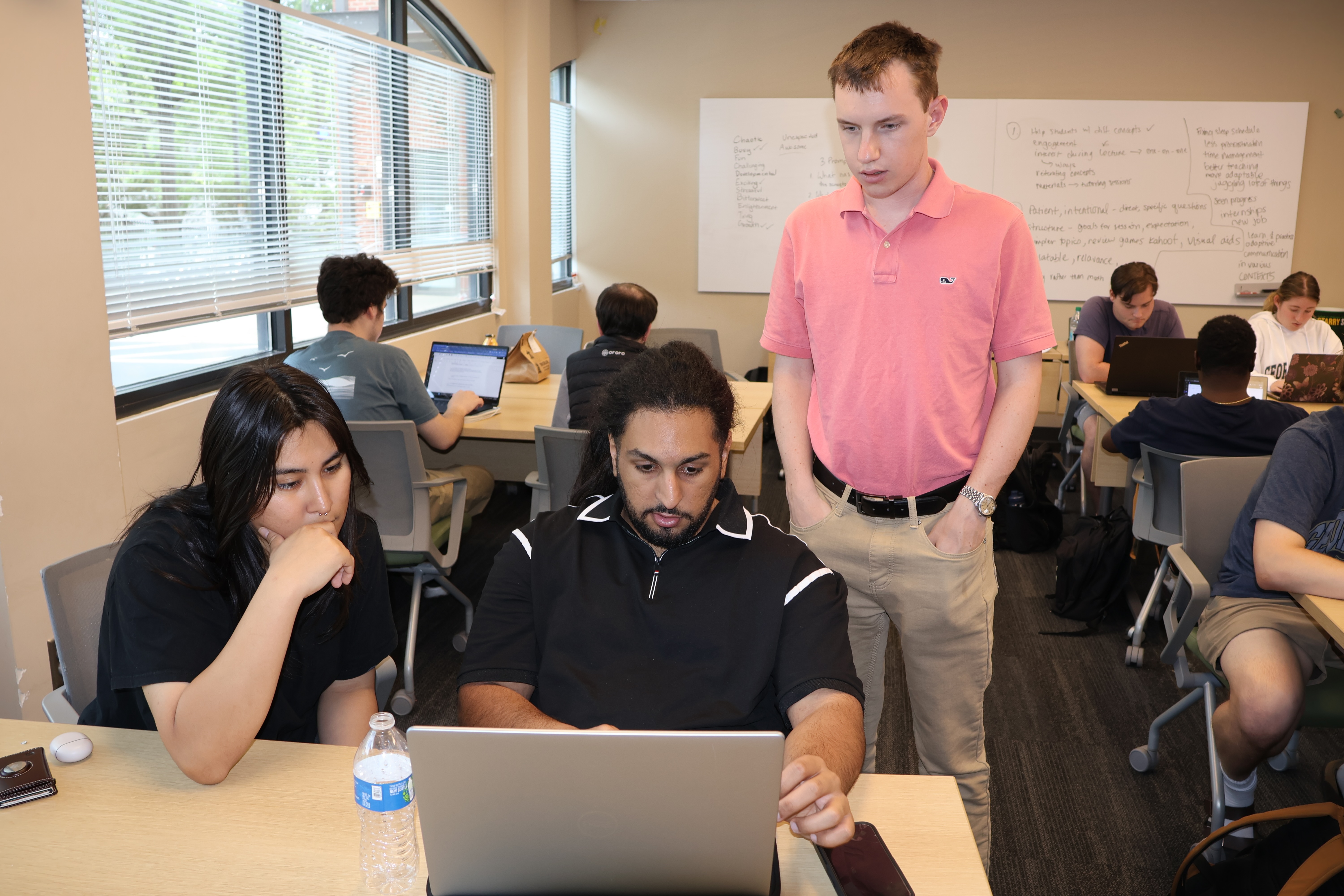 Braden Bartels, a graduating senior in the EXCEL Program, served as a teaching assistant alongside computer science major Zeus Polanco Salgado.
Bartels, who plans to pursue a career in AI infrastructure and data center operations, sees many ways AI can support EXCEL students. In his role, he drew on his own experiences to help students navigate new tools and transition between platforms. "Being an EXCEL student gives me a unique perspective on how these tools can help students succeed," he said. "I really enjoyed helping others learn how to use them effectively."
As the semester ended, students created personalized products with AI tools, including a professional NFL team fan website, various interactive games, PowerPoint presentations, and interactive apps that promoted health and well-being. Each student presentation outlined the tools used, personal decisions in AI use, and strategies for Al use in their lives now and moving forward. Reflecting on the class, Polanco Salgado said, "It was really rewarding to see how quickly students started using these tools in ways that made sense for them and their daily lives."