

Atlanta, GA | January 12, 2026
Story and Photos by Randy Trammell
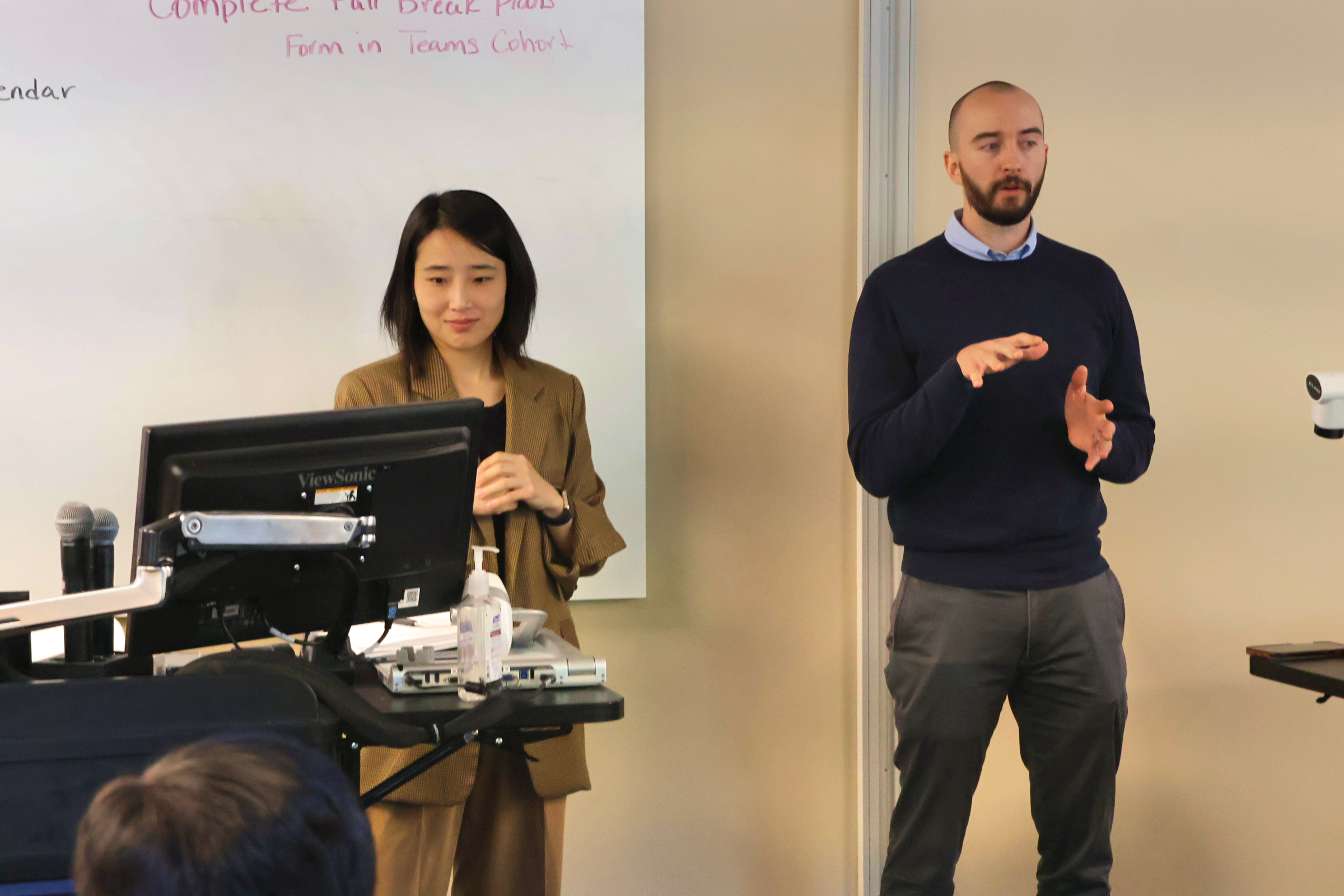
A pair of Georgia Tech researchers brought their prototype haptic device to students in Georgia Tech’s EXCEL Program as part of a research study developing wearable technology that creates an experience of touch using vibrations while gathering sensory data from the user through skin contact.
Eunhye Grace Flavin, senior research scientist with the Center for Education Integrating Science, Mathematics, and Computing (CEISMC), and Matthew Flavin, assistant professor in the School of Electrical and Computer Engineering, are collaborating on the research project. Their focus is on exploring how haptic devices, commonly used in gaming and vibrating cellphones, could help facilitate learning by college students.
Inside the Prototype
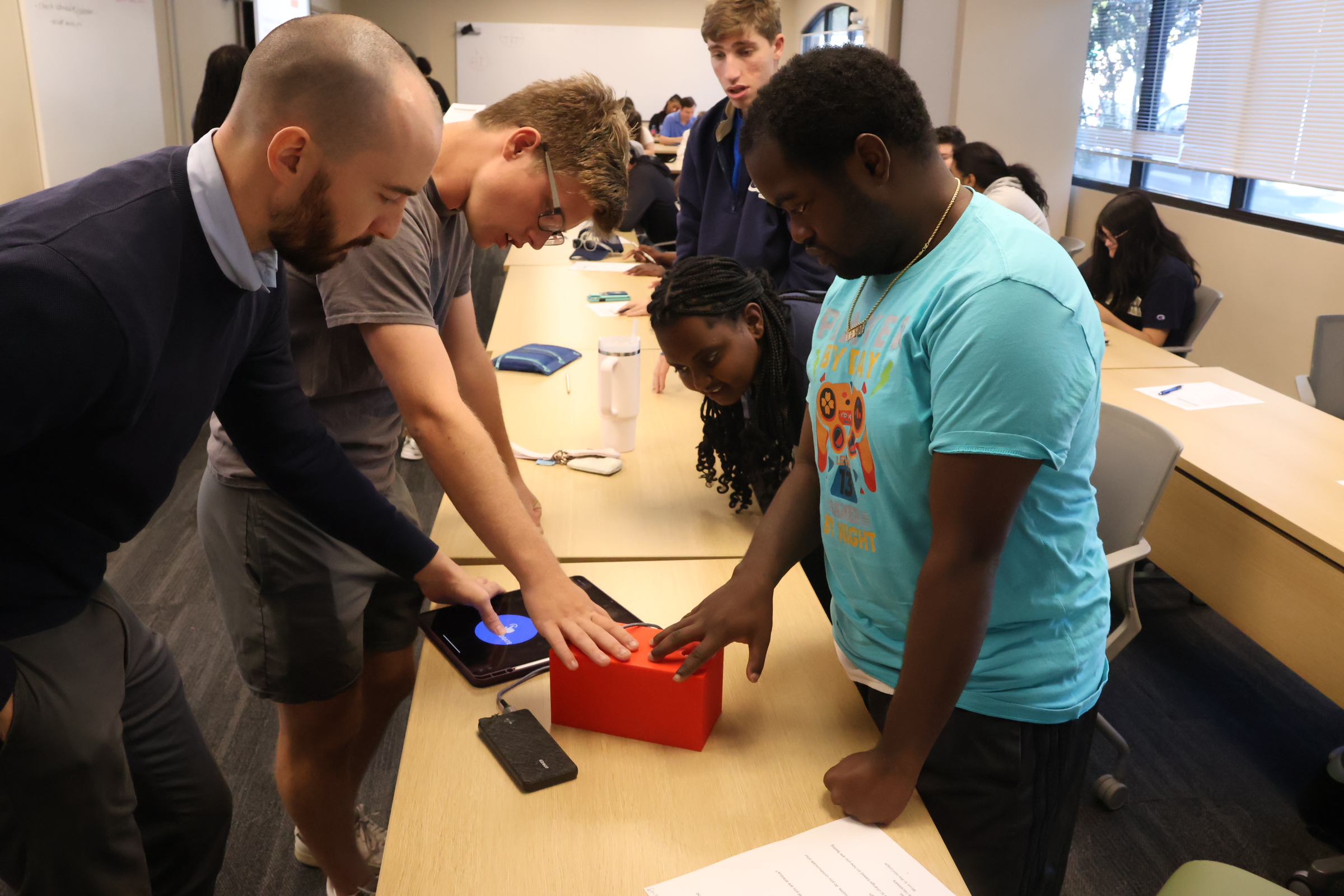 Matthew Flavin leads the Flavin Neuromachines Lab, which sits at the intersection of engineering, biosciences, and computing. Eunhye and Matthew Flavin also lead a Vertically Integrated Projects (VIP) team composed of undergraduate students at Georgia Tech who developed and validated the haptic prototypes. Flavin explained that the prototype they brought to EXCEL students was a Bluetooth-controlled device designed to vibrate, with the goal of developing a small, wearable device.
“In my research, in my lab, we make bioelectronic wearables. We make devices that can be worn on the body and measure things from the body. What my group is good at is making these haptic devices,” he said. “We’re good at making these small-scale mechanical systems that can poke, twist, and vibrate to engage the physical sense of touch—all from these wearable devices.”
Flavin noted that since people have sensory receptors throughout their skin, his research focuses on engaging the sense of touch more thoroughly. “We have sensory receptors throughout our entire skin, our largest organ, and like our eyes have red, green and blue receptors that give us color vision, we have multiple types of receptors in our skin that are sensitive to vibration and low-frequency pressures,” he said.
“As part of our work, we are trying to engage our sense of touch more comprehensively, going from the equivalent of black-and-white vision to color vision. Right now, one of the ways most people are familiar with haptics is through vibration actuators. Our phones have them. Video game controllers have them. It’s easiest to deliver a sense of touch through vibration. Part of our research is engaging those things more comprehensively as well as looking at new applications.”
Applications for Learning and Accessibility
 One research thread focuses on developing devices for people with sensory impairments, such as those who are visually impaired or have experienced stroke or spinal cord injuries, to help compensate for missing sensory information.
“One of the new applications that Eunhye Grace Flavin and I have been collaborating on is using these haptic devices to create more engaging sensory experiences for kids who might not be engaged through normal means on different educational tasks,” Matthew Flavin said. “We are looking at kids but also expanding to college students. In particular, we want to help people who are experiencing math anxiety. One goal of this research is to make devices that help people feel calmer.”
This is where Eunhye Grace Flavin’s expertise as a learning scientist at CEISMC comes in. Her research specialties include mathematics education, learning science, and educational technology.
“We wanted to think about how haptic devices could be used in the education setting, especially with students with sensory processing disorders,” she explained. “Many people are struggling in the mathematics classroom. They get anxious. They get nervous. So, we are thinking about how we can detect students’ emotions, and then we can use that information—and give that information to teachers—so they can respond. The haptic device is used to let teachers know what students are experiencing.”
EXCEL as an Ideal Research Partner
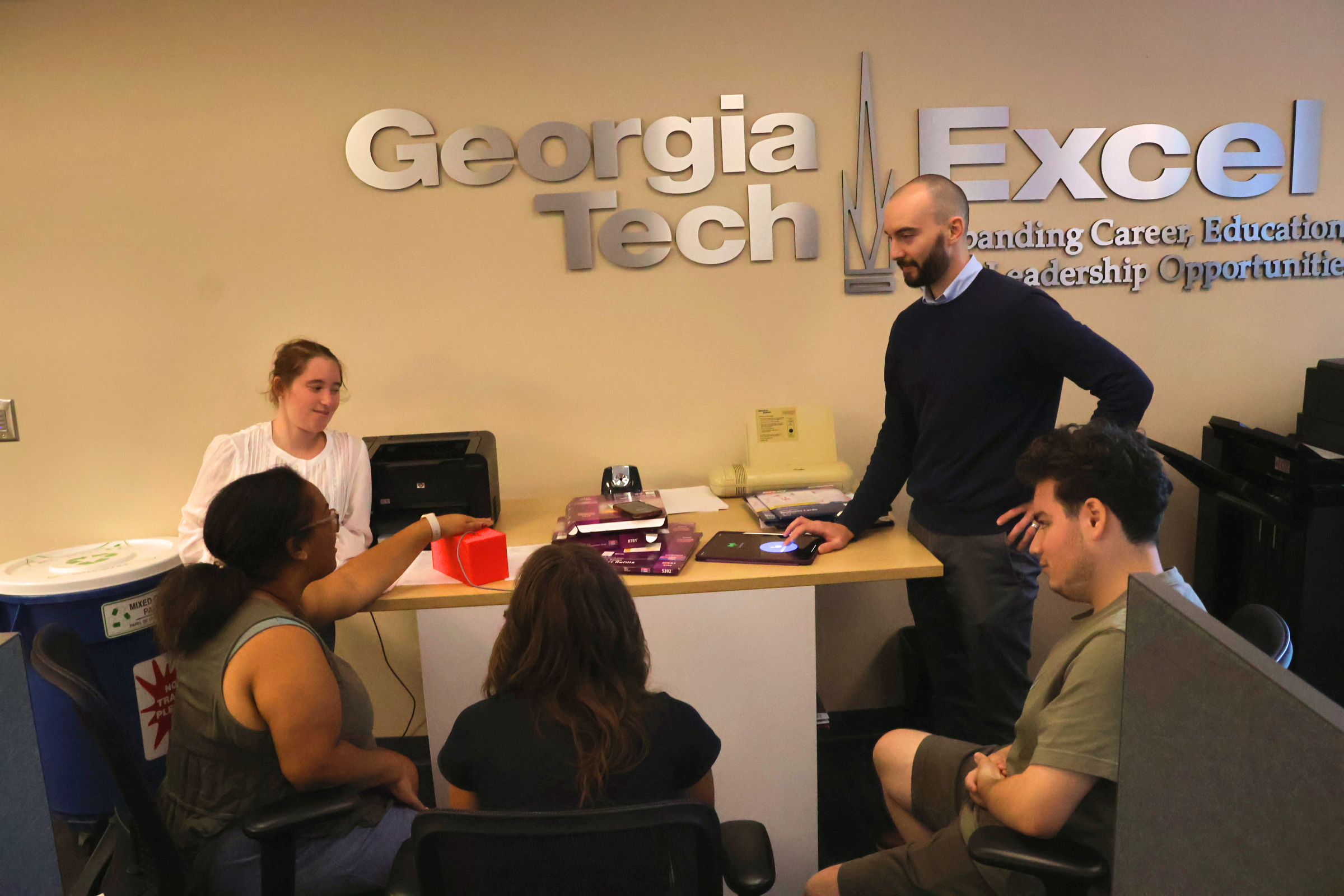 The research team had access to a college population to inform their work. Students from the EXCEL Program served as an ideal audience for this study. The EXCEL Program, housed within CEISMC, is a four-year college certificate program for students with intellectual and developmental disabilities.
“We brought this idea, the research, to the EXCEL Program because the students are amazing, and there is research showing that generally more than 90% of Americans have some math anxiety, especially students with learning disabilities,” Eunhye Grace Flavin said. "Sometimes they can feel marginalized in the classroom without adequate support. They can feel more anxious. That’s why we wanted to learn from the EXCEL students and their experiences. We want to create this technology that supports all students, but starting with students who have often been historically marginalized.”
EXCEL students worked with the Flavin team in a question-and-answer format discussion gauging their current knowledge and use of haptic devices. A few students also volunteered to try out the device in a hands-on session. The overwhelming majority of students were very receptive to the prototype and commented on its potential usability in their own lives.
“We asked students what their feelings were about it just to see,” Matthew Flavin explained. “We also asked some qualitative questions about usability and preference for these devices. The students said that this was something they could find relaxing when delivered in certain ways. They found it interesting, and so we are building on that feedback to develop systems targeted to their particular needs and designed to help them.”
“Students said, ‘Oh, this is so soothing,’” Eunhye Grace Flavin added. “They said they can use it when they get nervous in the classroom. They felt the vibrations were calm and soothing. When they feel nervous in class, they can put their hands on it.”
Advancing Lifetime Learning
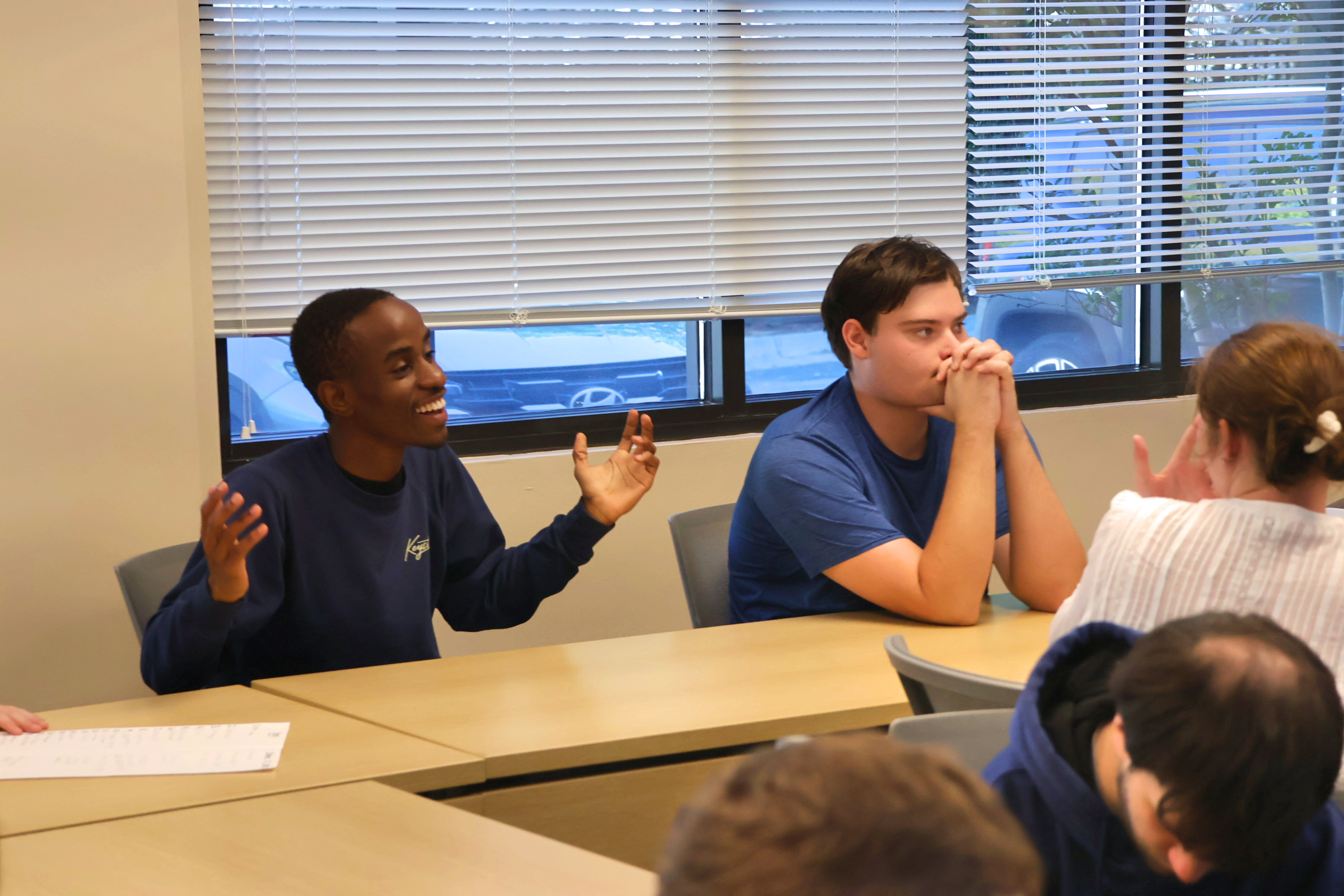 According to EXCEL lecturer and academic coordinator Justina Jackson, the experience was a strong example of how the program’s students contribute to the university’s research efforts. “Our students are eager to hear about new technologies that have potential to improve people's learning experiences,” she said. “The session provided useful feedback to Eunhye and Matt. I hope these insights about past learning experiences are helpful to them as they develop their research further. We appreciate the opportunity to contribute.”
Now that CEISMC—and by extension the EXCEL Program—are part of the College of Lifetime Learning, Eunhye Grace Flavin emphasized how this work mirrors the mission of the College. “We're really doing this to uplift the voices of the EXCEL students and generally students who are often neglected in the classroom. This research also benefits Georgia Tech students,” she said. “Through the College of Lifetime Learning lens, we really want to see how new learning technologies, how new learning sciences and design principles can support students’ learning by implementing this new technology. This research can be an example of the kind of research that our College of Lifetime Learning research faculty and later tenure-track faculty can pursue.”